
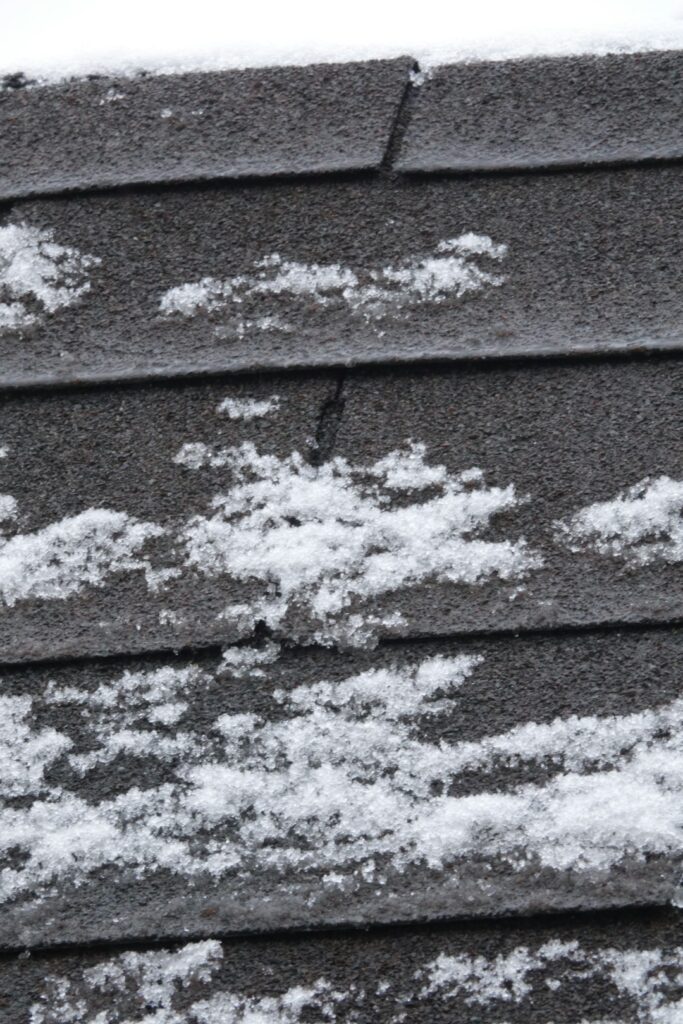
Hail can damage roofing materials without creating an obvious hole or causing an immediate leak. In Red Hook, NY, spring and summer thunderstorms can bring short bursts of hail, strong wind, and heavy rain, so roof damage may be easy to overlook once the storm has passed.
The most reliable approach is to look for several related signs rather than relying on one mark. Hail damage often affects shingles, metal components, gutters, siding, windowsills, and outdoor equipment at the same time.
What does hail damage look like on asphalt shingles?
Hail damage on asphalt shingles often appears as small, irregular depressions where the protective surface has been struck. The damaged area may feel soft or bruised, and some of the granules that normally cover the shingle may be missing.
From the ground, look for:
- Dark or light spots that appear in scattered patterns
- Areas where the shingle surface looks scraped, pitted, or unusually smooth
- Missing granules collecting in gutters or near downspouts
- Cracked, split, or torn shingles
- Exposed fiberglass mat beneath the shingle surface
- Shingles that appear loose or displaced after the storm
A hail impact does not always create a clean, round indentation. The appearance can vary with the size of the hail, wind speed, roof age, shingle composition, and the angle at which the hail struck.
Fresh damage may be difficult to distinguish from ordinary wear. Older shingles naturally lose granules, become brittle, and develop surface cracking. Hail damage is more convincing when isolated impact marks occur across several roof sections and are accompanied by damage to metal fixtures or exterior surfaces.
Can hail damage be seen from the ground?
Some signs can be seen safely from the ground, but a roof can look normal from the driveway even when shingles have been weakened. Hail damage is often subtle, especially on roofs with dark or heavily textured shingles.
Use binoculars or a camera with a zoom feature to examine:
- Roof edges and lower courses of shingles
- Ridge caps and hip caps
- Areas around vents, chimneys, and skylights
- Shingles on slopes facing the direction of the storm
- Loose material or debris in valleys and gutters
Do not climb onto the roof simply to inspect suspected damage. Wet shingles, steep slopes, moss, hidden structural problems, and loose granules can make walking hazardous. A ladder should also be used carefully, particularly after wind or rain may have affected its footing.
Which roof components show hail damage most clearly?
Metal components often reveal hail impacts more clearly than shingles. Check visible portions of:
- Ridge vents and box vents
- Metal flashing
- Gutters and downspouts
- Drip edges
- Chimney caps
- Furnace or plumbing vent covers
- Aluminum siding and exterior trim
Look for dents, dimples, chipped paint, or fresh scratches. A pattern of dents on several exposed metal surfaces can support the possibility that the roof was affected during the same storm.
However, a dent does not automatically prove that a roof requires replacement. Metal can be dented by falling branches, tools, ladders, or previous storms. The date, pattern, and location of the damage all matter.
What should homeowners check around the property?
Hail often leaves evidence beyond the roof. Inspect the property from ground level after conditions are safe.
Possible clues include:
- Dents or chips on window trim and painted surfaces
- Damaged screens
- Cracked skylight covers
- Bruised or broken outdoor fixtures
- Hailstones or ice fragments found after the storm
- Fresh damage to garden plants, shrubs, or small branches
- Dents on vehicles or outdoor equipment
These signs do not prove that shingles are damaged, but they help establish whether hail reached the property with enough force to affect exterior materials.
In the Hudson Valley, storms can produce a mixture of hail and strong straight-line wind. Wind may lift or crease shingles, while hail creates localized impact marks. Both types of damage can occur during one storm and should be considered separately.
How can hail damage be confused with normal roof aging?
Normal aging usually develops gradually and consistently across the roof. Hail damage is more likely to appear as distinct impact areas or scattered bruises.
Common conditions that may be mistaken for hail include:
- Granule loss caused by age or repeated rainfall
- Cracked shingles caused by drying and temperature changes
- Curling caused by long-term exposure
- Staining caused by algae or moisture
- Blistering caused by manufacturing or heat-related conditions
- Damage from foot traffic, branches, or maintenance work

A roof that is already older may show both age-related wear and storm damage. The two conditions can overlap, which is why a close inspection should consider the roof’s installation history, previous repairs, storm timing, and the pattern of visible defects.
Are roof leaks proof of hail damage?
No. A leak after a hailstorm does not automatically mean hail caused it. Water may enter through a damaged flashing joint, worn seal, lifted shingle, clogged valley, chimney transition, or an older weak point that the storm exposed.
Check the attic or upper interior areas for:
- Damp insulation
- Water stains on roof decking
- Darkened wood
- Dripping water
- Musty odors
- Peeling paint or ceiling discoloration
A leak can develop hours or days after the storm, especially when later rainfall reaches a weakened area. Place a container under active dripping when safe, move belongings away from the water, and avoid touching wet electrical fixtures.
Interior staining may also appear away from the actual roof entry point because water can travel along rafters, decking, insulation, and ceiling materials.
What should be documented after a hailstorm?
Document conditions before making temporary changes, provided there is no immediate safety risk. Useful records include:
- The date and approximate time of the storm
- Photos of roof areas visible from the ground
- Close-up photos of damaged metal, siding, screens, and gutters
- Photos of interior stains or active leaks
- Notes about fallen branches, strong wind, or hail size
- Receipts for emergency measures or temporary protection
- Records of earlier roof repairs and maintenance
Photographs are most useful when they include both a wide view showing location and a close view showing the condition. Avoid walking on the roof or moving damaged materials before they have been documented.
Insurance coverage, deductibles, deadlines, and repair responsibilities depend on the individual policy and the circumstances of the loss. A storm-related inspection does not guarantee that a claim will be covered or that an entire roof must be replaced.
When is an inspection necessary?
An inspection is warranted when there are visible impact marks, missing or displaced shingles, repeated leaks, damaged metal components, or uncertainty about the roof’s condition after a significant storm. It is especially important when the roof is steep, high, wet, or difficult to access safely.
A qualified inspector should be able to distinguish hail impacts from age, manufacturing defects, foot traffic, wind damage, and previous repairs. The evaluation should consider the whole roof system rather than counting isolated marks without examining surrounding materials.
For area households, the practical lesson is simple: inspect from the ground, document what can be seen safely, check the attic for signs of water entry, and treat unusual damage patterns seriously even when the roof does not appear badly damaged at first glance.
