
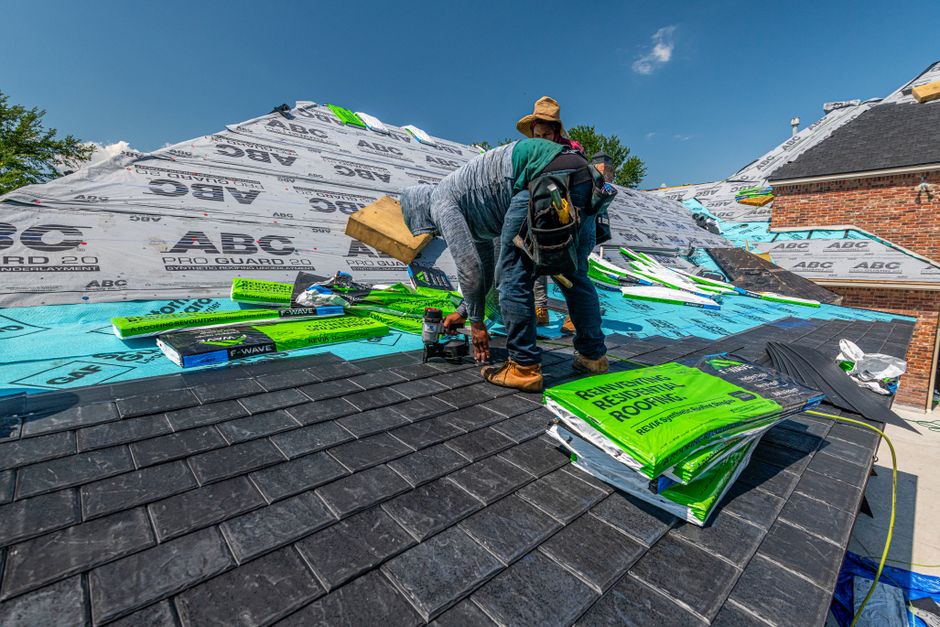
A roof can look worn without needing to be completely removed, but visible wear does not always reveal what is happening underneath. The difference between re-roofing and roof replacement is mainly whether new roofing is installed over the existing roof or the old roofing system is removed down to the roof deck.
For homeowners in Red Hook, NY, that distinction affects cost, construction time, ventilation, moisture control, code compliance, and the long-term condition of the house.
What is re-roofing?
Re-roofing means installing a new layer of roofing material over an existing layer. With asphalt shingles, this usually involves placing new shingles directly over the old shingles after checking that the existing surface is reasonably flat, dry, and structurally sound.
Re-roofing is not the same as repairing a few damaged shingles. It is a surface-level renewal of the roof covering, while much of the underlying roofing assembly remains in place.
A re-roofing project may be considered when:
- The existing roof has only one layer of shingles.
- The roof deck is not sagging, soft, or water-damaged.
- There are no widespread leaks or signs of trapped moisture.
- The existing shingles are relatively flat rather than badly curled or buckled.
- Flashing around chimneys, walls, skylights, and roof penetrations can be properly addressed.
- The roof’s slope and ventilation are suitable for another layer.
Re-roofing can reduce tear-off work and limit the amount of time the roof is exposed during construction. It may also reduce the amount of old roofing material sent for disposal. However, the new layer does not correct problems hidden beneath the existing shingles.
What is a full roof replacement?
A full roof replacement generally involves removing the existing shingles, underlayment, flashing, and other roof coverings so the roof deck can be inspected directly. Damaged decking may then be repaired or replaced before a new roofing system is installed.
The replacement process may include:
1. Removing the old roof covering.
2. Inspecting the roof deck for rot, delamination, mold, or water damage.
3. Replacing deteriorated sheathing where necessary.
4. Installing new underlayment and water-shedding components.
5. Replacing or upgrading flashing around vulnerable areas.
6. Installing the new roof covering.
7. Checking ventilation, drainage, and details at edges and penetrations.
A full replacement provides a clearer view of the roof’s actual condition. It is usually the more appropriate approach when damage extends below the shingles or when several parts of the roof system have reached the end of their service life.
Which option lasts longer?
A properly installed full replacement generally offers greater long-term certainty because the roof deck, underlayment, flashing, and ventilation can be evaluated and corrected. Re-roofing may still perform well, but its lifespan depends heavily on the condition of the older roof beneath it.
A new surface cannot eliminate:
- Rotting roof decking
- Inadequate ventilation
- Poorly installed flashing
- Long-term moisture intrusion
- Structural movement
- Uneven or sagging roof planes
If the existing roof is sound and the work is allowed under applicable requirements, re-roofing can be a reasonable option. If the old roof is already failing as a system, adding another layer may postpone the visible problem without solving the cause.
How can a homeowner tell which option may be needed?
Some clues can be observed from the ground or attic, although a roof’s full condition cannot always be determined without a close inspection.
Signs that may support re-roofing include:
- Shingles are aging but remain mostly flat.
- Granule loss is present but not severe across the entire roof.
- Leaks are isolated and appear related to surface wear rather than widespread failure.
- The roof deck looks dry and solid from the attic.
- There is only one existing layer of roofing.
Signs that point toward full replacement include:
- Shingles are curling, cracking, blistering, or missing in many areas.
- The roof has multiple layers already.
- Leaks occur in several rooms or along multiple roof sections.
- Stains, damp insulation, or daylight are visible in the attic.
- The roof deck feels soft or shows darkened, deteriorated areas.
- The roof sags between rafters or along ridgelines.
- Flashing is damaged or has been repeatedly patched.
- Ice dams or winter water intrusion have caused recurring damage.
A roof that looks acceptable from the street may still have problems around valleys, chimneys, sidewalls, skylights, and eaves. These areas deserve particular attention because water can travel beneath roofing materials before appearing indoors.
Why does the local climate matter?
The seasonal conditions in Red Hook include cold winters, snow, freezing rain, rain-on-snow events, and repeated temperature changes. Those conditions place stress on shingles, flashing, sealants, gutters, and the roof deck.
Freeze-thaw cycles can enlarge small cracks and allow moisture to move beneath roofing materials. Heavy or wet snow can add temporary loads, while ice buildup near eaves can interfere with drainage. Spring thaw can reveal damage that was not obvious during the warmer months.
Older homes and houses with additions may have several roof slopes, different construction eras, or complicated connections between roofs and walls. Those details can make the condition of flashing and drainage more important than the age of the shingles alone.
A roof replacement is also an opportunity to identify hidden moisture damage before another layer covers it. That can matter in a climate where small leaks may remain unnoticed until insulation, sheathing, or interior finishes have already been affected.
Does re-roofing always cost less?
Re-roofing often requires less labor and produces less tear-off debris, so the initial project cost may be lower. That does not automatically make it the less expensive choice over time.
If hidden damage is ignored, the roof may require additional repairs later. Problems can also become more difficult to locate because the original roof layer remains beneath the new one. In some cases, a future replacement will require removing both layers, increasing the amount of material and labor involved.
The more useful comparison is not simply the price of new shingles. It is the condition of the complete roof system, including the deck, underlayment, flashing, ventilation, drainage, and number of existing layers.
Are there code considerations?
New York’s residential building requirements address both reroofing and roof replacement. Requirements can involve the number of existing layers, structural loading, roof drainage, underlayment, ice-barrier protection, ventilation, and the condition of the roof deck.
Rules can change, and local enforcement procedures may vary. Permit questions should be checked before work begins, especially for older houses, steep roofs, structural repairs, additions, or projects involving changes to the roof assembly.
A roof should not be covered over if the underlying deck is not adequate to support the new roofing or if moisture damage has compromised the assembly. Safety also matters: steep slopes, fragile materials, snow, ice, and concealed roof damage create genuine fall and structural hazards.
What is the simplest way to think about the choice?
Re-roofing covers an existing roof that is still fundamentally sound. Full replacement removes the old roof so the entire roofing system can be examined and rebuilt where needed.
A practical decision usually depends on four questions:
- How many roofing layers are already present?
- Is the roof deck dry, solid, and properly supported?
- Are leaks isolated or widespread?
- Are flashing, ventilation, drainage, and winter moisture issues being corrected?
If the answers point to a sound roof with limited surface wear, re-roofing may be suitable. If the answers reveal concealed damage, multiple layers, structural concerns, or recurring leaks, a full replacement is generally the more complete solution.
